The Curriculum and Assessment Review didn’t hold back: “the current system is not working well for all. High standards too often means ‘high standards for some.’”
For English leads, this probably isn’t news. It just puts into words what we already see: pupils who can talk but struggle to write; teachers giving their all, yet still unsure how to adapt; lessons planned with ambition, but outcomes that fall short.
It’s not because pupils don’t care, but because the system wasn’t designed to support them.
As teachers we feel that tension. We believe in inclusion – but we’re not always sure how to make it happen. The good news? That’s where subject leadership comes in.
Not the title. Not the assessment software. The actual leadership – the choices you make around texts, tasks, feedback and talk.
When the system doesn’t work for all, it’s subject leaders who redesign the parts that matter most: curriculum, pedagogy and culture.
Naming the real challenge
If you’re an English lead, you might recognise this:
- “I care about inclusion, but I don’t always know how to deliver it.”
- “We’re using strategies that work, but they’re inconsistent.”
- “Colleagues are confused about writing for all. It already feels hard, so they’re not sure how to adapt.”
This isn’t a staffing issue. It’s a clarity issue. When colleagues aren’t sure what good inclusive practice looks like – or how to do it reliably – everyone struggles. Progress gaps widen. Pupil confidence falters. Inclusion becomes intent, not impact.
But it doesn’t have to be that way.
8 inclusive leadership moves
These aren’t quick fixes. They’re sustainable leadership habits that foster inclusion through clarity – not overload.
Plan backwards from your least confident writer
Start with access needs, not the highest attainers.
Why it matters: You’ll anticipate barriers earlier.
Unlocks: Sharper model texts, clearer success criteria, more inclusive scaffolds.
Use model texts that support structure, not just engagement
Great texts don’t just inspire – they enable.
Why it matters: Fluency builds from predictability, not surprise.
Unlocks: Syntax support, grammar in context, more independent writers.
Shift oracy from “nice to have” to strategy
Talk is how pupils organise thought.
Why it matters: Speech is rehearsal.
Unlocks: Vocabulary access, sentence fluency, participation from reluctant writers.
Redraft with one focus, not all of them
Direct focus avoids overwhelm.
Why it matters: Clear focus = deeper thinking.
Unlocks: Confidence, clarity and more precise feedback.
Build inclusive routines across the team
Consistency matters. If one teacher uses stems and another doesn’t, pupils fall through the gaps.
Why it matters: Equity thrives on consistency.
Unlocks: More reliable support, smoother transitions, calmer learning.
Normalise adaptive teaching through planning questions
Great adaptations start in planning, not rescue. Ask:
- “Which vocabulary might need pre-teaching?”
- “What barrier might arise here?”
Unlocks: Proactive teaching, not retrofitted support
Make assessment about access, not just attainment
We don’t just need to know who’s behind. We need to understand why.
Why it matters: Assessment should shape, not shame.
Unlocks: Smarter feedback loops, more intentional support.
Talk about writing as a process
If pupils think writing is about getting it right first time, they’ll opt out.
Why it matters: Process builds self-efficacy.
Unlocks: Better stamina, more risk-taking, stronger identity as writers.
What the Review didn’t say – but English leads must
The Curriculum Review offers critique, but it doesn’t tell subject leaders what to do. That’s our role. And it starts with how we lead curriculum, conversation and classroom habits.
High standards for all aren’t a fantasy. It’s a leadership challenge, and one that begins in the way we:
- Choose texts
- Scaffold progress
- Redraft writing
- Talk with teams
Every choice is a message. Every routine is an access point. Align them with purpose and you don’t just build better lessons – you build a more inclusive system.
The Review reminds us of the stakes. We can’t accept a system that works for some but not all. So let’s not wait for permission. Let’s lead from where we are, through what we notice, share and do next. Because when inclusion becomes the job, leadership becomes purposeful.
Whatever model you use, ensure it helps your team deliver inclusion through clarity and consistency, not complexity. High standards aren’t optional – but they must be equitable.
How Leading English supports this
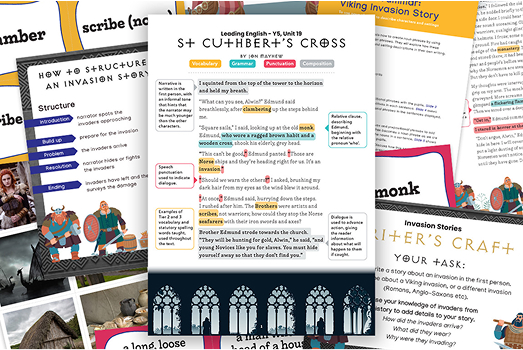
If you use Leading English, you already have a model designed for inclusive, high expectations:
- Model texts with deliberate grammar, structure and vocabulary built in
- Medium-term plans with clear progression and scaffolding prompts
- Assessment by exception – noticing growth and planning from need
- Dialogue prompts to lead effective conversations around planning, progress and pedagogy