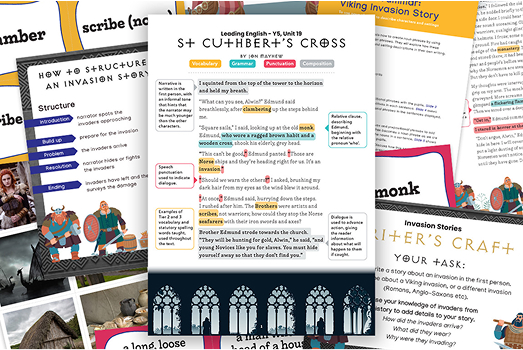
This week, I spent time in a Year 2 classroom in one of our partner schools.
It was a genuine privilege. Not because of spectacle or performance – no dry ice, flashy pedagogies for the sake of it, or theatrical moments. It was the conversations I had with the children that stayed with me.
Deep understanding in action
I walked in halfway through the lesson and the pupils were deep into paired tasks on sentence construction. But what struck me wasn’t just what was being taught. It was the depth of understanding they demonstrated, and the confidence with which they could explain their thinking.
This wasn’t a leafy, highly affluent school. It was a community with significant needs, where many children enter the classroom facing barriers.
Yet here they were, exploring compound sentences, joining ideas, experimenting with vocabulary, noticing subtle shifts in meaning – all with a sense of play but also seriousness.
This mattered to them. They were reporting back to each other and to the teacher, reflecting on their discoveries through tasks that combined high expectations with core learning.
Talking about writing
When I spoke to pupils, they didn’t just describe what they had written. They explained why. They reflected on how sentences worked and how they were improving.
Their contextual understanding of grammar was clear. That kind of mastery is powerful – it shows up in conversation and explanations before it appears on paper.
Impact across the school
Later, I visited classrooms further up the school, including Year 6. Again, it wasn’t just the finished pieces that impressed me – it was the pupils’ relationship with writing.
Editing and redrafting were happening in real time. Children paused, reread, reconsidered and made deliberate choices.
When asked, they could articulate what they were trying to improve and why. Pride wasn’t only in finished work, but in the process itself.
Grammar was enhancing writing – not via a tick-box checklist, but through intentional choices to achieve specific effects.
This school is seeing the impact of coherent, cumulative teaching where foundational knowledge is revisited, strengthened and extended.
How this became possible
This didn’t happen overnight, and it wasn’t by chance. Alongside the use of Leading English resources, leaders at all levels have worked to build clarity, confidence and shared understanding.
In-school CPD hasn’t been about quick fixes, but about genuine professional learning: developing subject knowledge, sharpening pedagogy and understanding the purpose of writing in each year group.
Time has been spent deconstructing the curriculum, asking hard questions and challenging each other through deep thinking. The goal isn’t compliance, but alignment – understanding what matters most for this community and why. That alignment is what pupils are now benefiting from.
Three high-value reflections for schools
Here are three practical takeaways from what I saw – relevant regardless of your curriculum or scheme:
1. Prioritise talk that reveals thinking
The strongest indicator of secure writing foundations isn’t always the written outcome – it’s what pupils can say about their writing.
When children explain why a sentence works, how word choices change meaning or what they’re trying to improve, they demonstrate deep understanding.
This understanding is built through deliberate talk: oral rehearsal, discussion of choices, reflective questioning. It reduces cognitive load, supports pupils who find writing demanding and gives teachers real-time insight into comprehension.
Ask yourself: Where in our lessons do pupils articulate their thinking, not just complete tasks?
2. Use sentence construction as a vehicle for mastery
Sentence-level work sits at the intersection of grammar, vocabulary and meaning. In the Year 2 classroom, sentence construction wasn’t a technical exercise – it was exploration.
What happens if we join these ideas? What if we change this word? How does it affect the reader?
This approach allows pupils to experience success quickly while thinking deeply, and makes progression visible.
The question isn’t “Do we teach sentence construction?” but “How often do pupils rehearse and refine sentences with purpose?”
3. Invest in CPD that builds understanding, not just compliance
The foundation for this practice is professional learning. Teachers have engaged in CPD that develops subject knowledge, not just familiarity with materials. Leaders have clarified expectations, aligned language and strengthened understanding of how writing develops over time.
This CPD respects capacity, creates shared understanding and moves writing away from checklists toward shared craft.
Ask: Does our CPD help teachers understand why they are teaching something – or just what to deliver?
Final thoughts
What stayed with me this week wasn’t a single lesson or outcome – it was hearing children talk about their writing with confidence, enjoyment and pride.
That happens when foundational knowledge is secure, leaders invest in professional learning and writing is treated not as performance, but as something to understand, practise and own.
How Leading English supports this work
At Leading English, our work goes beyond providing resources. We partner with schools to secure strong, equitable writing foundations in ways that are realistic, sustainable and rooted in everyday practice.
We work alongside schools to clarify the purpose of each year group, strengthen progression and ensure foundational knowledge is taught deliberately and revisited over time. This includes sentence construction, grammar for meaning, vocabulary and the writing process.
Crucially, we support leaders at all levels. Through in-school CPD, coaching and collaborative planning, we help schools build shared understanding, not compliance.
Our approach respects capacity, develops subject expertise and empowers teachers to make confident classroom decisions.