Inclusion doesn’t belong in the margins. It is the work. And for English leads, it’s often the clearest place to start.
Too often, inclusion is treated as something extra – additional support, extra scaffolding, an add-on in planning. But when it’s seen as additional, it also becomes optional. That’s a problem.
Inclusion isn’t just about support strategies. It’s about curriculum choices, classroom culture and leadership. It’s about building a subject that works for all pupils, not just some. And that’s where your role as an English lead makes the difference.
You might not have the release time you want. You might be juggling a full teaching load. But when it comes to inclusion, you’re already leading – in what you model, question, notice and celebrate.
You don’t need permission to lead inclusion. You just need clarity, presence and consistency.
7 ways English leads make inclusion happen
1. Choose model texts that open doors, not close them
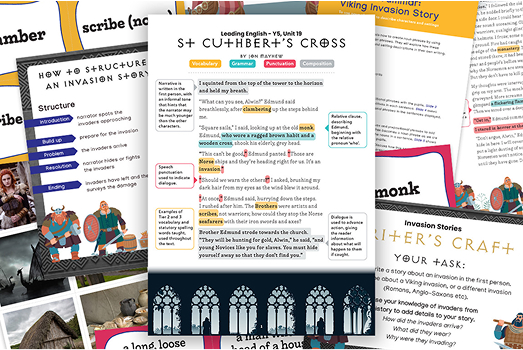
The right model text does more than entertain. It provides structure, language and opportunity. Inclusive texts build access – through theme, syntax, imagery or ideas. They support pupils who need structure without limiting those ready to fly.
Leadership move: Curate a ‘core texts for access’ list. Share why each one supports all learners. Use model texts with built-in scaffolds, sentence frames and key vocabulary to support consistency, not just coverage.
The Writing Framework reminds us: “Medium-term planning… is not an optional extra.” Model texts can embed grammar, vocabulary and composition steps that build confidence and reduce cognitive load.
2. Make oracy part of your subject strategy
If pupils can’t say it, they’ll struggle to write it. Oral rehearsal strengthens syntax, vocabulary and confidence – benefiting every learner, especially those with language or processing needs.
Leadership move: Prioritise talk. Use sentence stems. Model the rehearsal process.
3. Lead through purposeful talk, not tasks
Subject leadership isn’t all about managing tasks – it’s about shaping thinking. Ask: “What did they learn about cohesion?” or “How did that scaffold shift sentence control?”
Leadership move: Use high-quality dialogue to elevate expectations and embed inclusion in team conversations.
4. Bring data to life in books and classrooms
Spot attainment gaps? Ask: Where are they showing up in work? What support routines are visible? What’s missing? Inclusion isn’t just about who’s behind – it’s about how we help them move forward.
Leadership move: Connect classroom realities to data in a low-stakes, practical way.
5. Embed shared routines that support everyone
When inclusive strategies depend on individual teachers, provision becomes inconsistent. Instead, agree on shared routines – pre-teaching vocabulary, oral rehearsal, sentence stems, live modelling, short redrafting.
Leadership move: Facilitate agreement on two to three shared inclusive routines. Implement through planning, not policy.
6. Influence planning with clarity, not control
Great planning isn’t about coverage. It’s about clarity. Focus on what pupils do with language: “use metaphor to reveal character”, “vary sentence structure for pace.”
Leadership move: Bring presence and purpose to planning conversations, aligning outcomes with inclusive practice.
7. Celebrate what inclusion looks like in real lessons
Inclusion isn’t built through frameworks alone. It’s built through culture – what gets noticed and shared. When you see great scaffolds, oracy routines or feedback in action, name them. Share them.
Leadership move: Use corridor coaching, briefings or CPD snippets to amplify inclusive practice.
When inclusion becomes the job, leadership becomes purposeful
You don’t need a new title to lead inclusion. And you certainly don’t need a clipboard. But you do need clarity.
The Writing Framework calls for subject leaders to strengthen provision, support pedagogy and improve outcomes. That’s not a checklist – it’s a cultural shift. And culture is built by people. Quietly. Consistently. Through everyday choices.
Inclusion isn’t an extra job. It’s the job.
How Leading English can help
At Leading English, we support subject leads to make inclusion real, sustainable and central – not a bolt-on or a burden.
We help you lead with confidence through:
- 1:1 coaching and planning support for subject leaders
- Curriculum consultancy that aligns inclusion with your English strategy
- Co-designed CPD to strengthen practice and shared routines
- Model units that embed inclusive principles from text choice to task design – with oracy, grammar and redrafting prompts built in