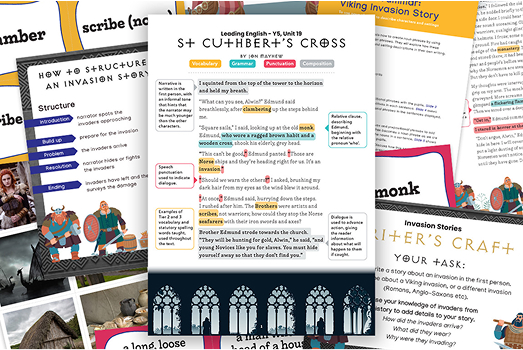
The uncomfortable truth about writing in many schools is this: if you looked at your books tomorrow, could you say with confidence that your writing curriculum is securing the foundational knowledge and skills every pupil needs to make progress, particularly your disadvantaged pupils?
Look closely at Key Stage 1. Are the fundamentals of transcription truly secure? Can pupils form letters fluently, spell with increasing accuracy and write simple sentences with control?
Or is there a gap between what we say is happening and what is actually evident in pupils’ work? If those foundations are not secure, everything that follows becomes fragile.
Why this matters
Writing is not just another subject. For many pupils, especially those facing the greatest barriers, writing is a gateway. It’s how they access the curriculum, express their thinking and succeed beyond school. If we don’t secure it early, we don’t just slow progress; we close doors.
In many schools, we see strong intent. Leaders talk about audience, purpose and effect, pupils write regularly and there is a clear emphasis on composition.
But too often, something critical is missing. Writing curriculums prioritise the outcome of writing, without securing the foundations that make that outcome possible.
Schools can end up convincing themselves that because pupils are writing more, they’re writing better. But when you look closely, the gaps are there in transcription, sentence construction and fluency.
Those gaps matter most for the pupils who have the least to fall back on. When foundations are insecure, writing becomes guesswork.
What actually makes the difference?
The difference is not more writing. It’s better sequencing. If we want pupils to write well, we have to plan the small steps of progress that get them there.
In practice, this means being precise about what sits underneath a successful piece of writing. Before pupils write independently, ask:
1. What are the non-negotiable components of this outcome?
Be explicit – sentence structures, key vocabulary, transcription expectations, text features. If these are not clear, teaching will lack focus.
2. What needs to be taught explicitly, not assumed?
Do pupils know how to construct the sentences you expect? Have they seen it modelled? Have they practised it in isolation?
3. Where is the rehearsal built in?
Before extended writing, pupils should have multiple opportunities to:
- say sentences aloud
- build and manipulate sentence structures
- practise short sections with guidance
If rehearsal is missing, independence will be fragile.
4. What does the teacher model and how?
Modelling is not just writing in front of pupils. It is making the thinking visible:
- why this word?
- why this sentence structure?
- how ideas are organised
Without this, pupils are left to infer too much.
5. When are pupils ready to write independently?
Independence should be earned through secure practice, not assumed because time has passed. If pupils are struggling to start, it’s often a signal that the steps beforehand were not secure.
How can Leading English help?
At Leading English, we work alongside schools to:
- strengthen subject leadership in English
- sharpen curriculum thinking so progression is clear and coherent
- support teachers in planning and delivering the small steps that lead to confident, independent writing
The focus is not on adding more. It’s on making what is already there work better – especially for the pupils who need it most. If we’re serious about improving writing, we have to be serious about the foundations.