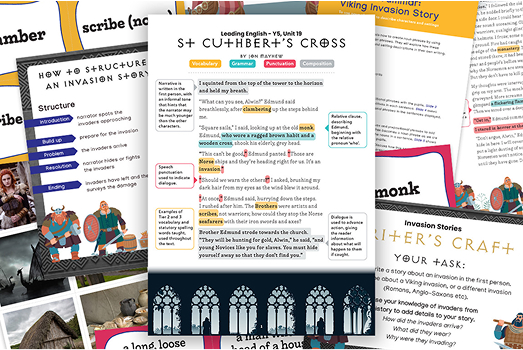
One of the biggest challenges teachers often face when teaching writing is planning the small steps of progress within a writing unit.
We know the final outcome we want pupils to reach. Whether it is a narrative, explanation text or persuasive piece, the destination is clear. The difficulty is often the learning journey towards that final piece of writing.
Without careful sequencing, writing units can easily become dominated by the final task. We ask pupils to write extended pieces before they’ve had enough opportunities to rehearse ideas, explore language, practise sentence construction or develop confidence with the structure of the text.
As a result, pupils can struggle to begin, writing can feel overwhelming and teachers may feel unsure how much modelling or scaffolding is needed.
Achievable moments
This is something I see regularly when working alongside schools.
Early in my own teaching career, I remember planning writing units by starting with the final outcome and then trying to work backwards from there.
Sometimes it worked well, but often I realised afterwards that I had supported pupils to produce finished outcomes without considering the key learning.
Over time, the biggest shift in my thinking came from focusing much more deliberately on the small steps of learning that sit between the starting point and the final outcome.
When we’re clear about those steps, the experience of writing changes for pupils. Instead of feeling like a large, intimidating task, writing becomes a sequence of achievable moments.
Pupils build confidence gradually, and we can see progress developing lesson by lesson.
How to plan small steps of learning
From the work I do with schools now, there are a few practical principles that seem to help teachers plan these steps effectively...
1. Identify the core skills upon which a final piece of writing depends
For example, if pupils are writing a persuasive letter, they may need to understand how:
- arguments are structured
- evidence supports a viewpoint
language choices influence the reader
If they’re writing a narrative, they may need to understand how character, setting and plot interact.
Once those elements are clear, you can plan opportunities for pupils to explore them separately before bringing them together in extended writing.
2. Modelling often plays a crucial role
Pupils benefit greatly from seeing the thinking behind writing. When we model how to construct a sentence, explain why we’ve chosen certain words or demonstrate how to organise ideas, pupils gain insight into the writing process itself.
This helps demystify writing and provides a structure pupils can build on.
3. Provide structured rehearsal before independent writing
This might involve:
- oral rehearsal
- shared writing
- sentence-level practice
- short sections of writing that focus on one aspect of the final outcome
These moments allow pupils to practise skills without the pressure of producing a full piece of writing straight away.
Gradually, we can combine those rehearsals into longer pieces of writing as pupils’ confidence grows.
4. Ensure teachers share a common understanding of expectations
In schools where writing develops strongly, staff often have a clear shared picture of what good writing looks like at different stages.
This shared understanding helps teachers plan learning steps that move pupils towards those expectations consistently.
5. Time for reflection is valuable
Looking together at pupils’ work, discussing what is working well and identifying where pupils need further support can help us refine the next steps in the sequence.
Writing development becomes a collaborative process rather than something each teacher navigates alone.
In summary
When these elements come together, writing units tend to feel more purposeful. Teachers know what each lesson is building towards and pupils experience writing as a series of manageable steps rather than a single daunting task.
How Leading English can help
Leading English supports schools in:
- strengthening English leadership
- developing shared curriculum thinking
building practical classroom approaches
Through a structured partnership with the headteacher, English subject leader and implementation team, we work alongside schools to:
- explore curriculum clarity
- support teachers in planning effective learning sequences
- develop sustainable approaches to writing
The focus is always on strengthening leadership capacity so that improvements continue long after the programme itself has finished.
If this is an area your school is currently reflecting on, we would be very happy to share more about how Leading English has supported other schools to strengthen writing development and subject leadership.